So, you’re probably wondering, “How on earth do they make those wirey, sometimes colorful, contraptions that are supposed to straighten my teeth?” It’s not magic, though it can feel a bit like it. Designing custom orthodontic appliances is actually a really clever blend of art and science, all tailored specifically to your unique smile. The short answer? It involves detailed scans of your mouth, sophisticated software, and a whole lot of precision by skilled professionals.
The Blueprint of Your Smile: The Initial Assessment
Before any appliance is even dreamed up, there’s a crucial first step: understanding exactly what we’re working with. Think of this as gathering all the intel needed for a complex engineering project.
Your Mouth, Mapped Out: Scans and X-rays
This is where the journey really begins. We’re not just looking at your teeth from the outside.
- Digital Impressions: Gone are the days of goopy molds that make you gag. Most modern orthodontists use intraoral scanners. These handheld devices take highly detailed 3D images of your teeth and gums, almost like a tiny camera with a big brain. This creates a virtual model of your mouth that’s incredibly accurate.
- Radiographs (X-rays): These are still super important. They let us see what’s happening underneath the surface – the roots of your teeth, the jawbone, and any developing adult teeth. Different types of X-rays (like panoramic and cephalometric) give us different views and crucial information about your bite and facial structure.
The Orthodontist’s Eye: Diagnosis and Treatment Planning
Once we have the digital and radiographic data, the orthodontist puts on their detective hat.
- Analyzing the Bite: This is more than just how your top and bottom teeth meet. We’re looking at how they relate to each other in all directions – side to side, front to back, and even how they move when you chew. Are there any gaps? Overbites? Underbites? Crossbites?
- Jaw Alignment: The health of your bite is intrinsically linked to your jaw’s position. We assess if your jaws are properly aligned or if their positions are contributing to the dental issues.
- Facial Aesthetics: Straightening teeth isn’t just about function; it’s also about how your smile contributes to your overall facial harmony.
From Data to Design: The Digital Realm
This is where the magic, or rather the technology, really kicks in. Your digital mouth model becomes the canvas for designing the perfect appliance.
Translating Your Smile to the Screen
Your scans aren’t just pretty pictures; they’re the foundation of a digital model.
- 3D Modeling Software: Specialized software allows the orthodontist or their team to manipulate your digital models, rotating them, zooming in, and examining every angle. It’s like having your mouth in a virtual sandbox.
- Simulating Tooth Movement: This is a game-changer. The software can actually simulate how your teeth will move over time with different treatment strategies. This helps us predict outcomes and fine-tune the plan before any physical appliance is even fabricated.
Setting the Destination: The Ideal Smile
The software isn’t just about looking at your current problem; it’s about designing your future smile.
- Virtually Straightening: Orthodontists use the software to meticulously move your teeth into their ideal positions. This is done tooth by tooth, considering the root position and how each tooth needs to move to achieve a stable, functional, and aesthetically pleasing result.
- Planning Archform: Beyond just straight teeth, we’re thinking about the shape of your dental arch – the curve that your teeth form. This impacts the overall look of your smile and how your teeth function together.
Crafting the Custom Appliance: The Art of Fabrication
Once the digital plan is perfected, it’s time to bring it into the real world. This is where the actual design and creation of your specific appliance happen.
The Choice of Appliance: Braces vs. Aligners
The type of appliance you need will dictate the fabrication process.
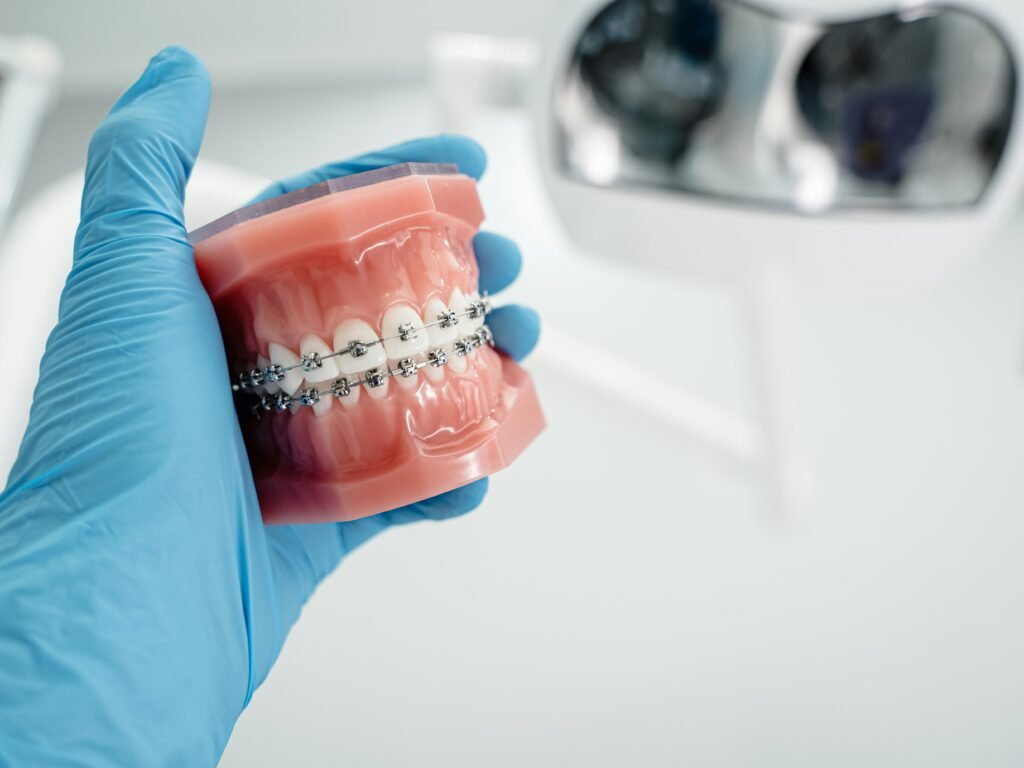
- Braces: While the treatment objective is digitally planned, the physical brackets themselves are often selected from a pre-designed range of types (e.g., self-ligating, lingual, traditional metal or ceramic) and then attached to your teeth in a way that follows the digital plan. The wires are then bent to guide the teeth.
- Clear Aligners: This is where the digital design translates directly into physical production. Your series of aligners are manufactured based on the step-by-step tooth movements simulated in the software.
Precision and Materials: Bringing the Digital to Life
The manufacturing process for custom appliances is about accuracy and using the right stuff.
- 3D Printing for Aligners: For clear aligners, the digital models of each stage of tooth movement are used to 3D print molds. These molds are then used to vacuum-form clear plastic trays – your aligners. This allows for rapid production of many sequential aligners.
- Material Science for Brackets: Brackets, the little squares glued to your teeth, are typically made from metal (stainless steel) or ceramic. They are designed to hold the archwire, which is the flexible wire that exerts gentle pressure to move teeth. The slots within the brackets are precisely engineered to interact with the archwire for controlled tooth movement.
- Wire Bending (for Braces): Archwires are made of different materials (like stainless steel, nickel-titanium) that have varying degrees of flexibility and springiness. Orthodontists or their skilled assistants often manually bend these wires to precisely match the specific tooth movements required at each stage of treatment. This is a skill honed through practice and understanding of biomechanics.
The Role of Technology in Precision
Technology is no longer just a nice-to-have; it’s fundamental to how orthodontic appliances are designed and made.
Digital Workflows and Efficiency
The way an orthodontic office operates has been transformed by digital tools.
- Integrated Systems: Many practices use integrated software systems that link patient records, digital scans, X-rays, and treatment planning software. This seamless flow of information reduces errors and speeds up the process.
- Cloud-Based Collaboration: In some cases, digital models and treatment plans can be shared with dental labs or manufacturing facilities virtually, allowing for efficient communication and production.
Advanced Fabrication Techniques
Beyond 3D printing, other advanced technologies are sometimes employed.
- CAD/CAM (Computer-Aided Design/Computer-Aided Manufacturing): This is essentially the backbone of digital dental manufacturing. It allows for the design and creation of highly precise dental devices, from crowns to orthodontic appliances, using computer technology.
- Robotic Wire Bending (less common for direct patient use but used in labs): While many wire bends are still done by hand, some advanced dental labs might utilize robotic systems for highly complex or repetitive wire bending tasks to ensure consistent accuracy.
The Human Touch: It’s Still About Your Smile
Despite all this technology, it’s essential to remember that a human, with expertise and an eye for detail, is still the driving force behind your treatment.
The Orthodontist’s Expertise
The technology is a tool; the orthodontist is the architect.
- Clinical Judgment: Software can suggest movements, but it’s the orthodontist’s years of training and clinical experience that determine the best course of action. They understand the nuances of biological response and can anticipate potential issues.
- Personalized Adjustments: No two mouths are exactly alike, even with highly accurate digital models. The orthodontist will often make small, on-the-spot adjustments to appliances based on how your teeth are responding and how you are feeling.
The Dental Team’s Skill
It’s a team effort in the modern orthodontic clinic.
- Scans and Imaging Technicians: These individuals are skilled in operating the advanced scanning equipment to capture the highest quality data.
- Lab Technicians (for braces): For traditional braces, skilled lab technicians might be involved in preparing custom brackets or fabricating specific appliances based on the orthodontist’s prescriptions.
- Orthodontic Assistants: These professionals are invaluable in assisting with appliance placement, adjustments, and ensuring proper fit and comfort for the patient. Their trained eyes can spot subtle issues that might otherwise be missed.
Designing a custom orthodontic appliance is a sophisticated process that ensures your treatment is efficient, effective, and tailored to your individual needs. It’s a journey from a detailed scan of your mouth to a precisely engineered device, all guided by the expertise of your orthodontic team.
FAQs
What are custom orthodontic appliances?
Custom orthodontic appliances are specialized dental devices designed to fit the unique shape and structure of an individual’s mouth. These appliances are used to correct misaligned teeth and jaws, and are tailored to each patient’s specific needs.
How are custom orthodontic appliances designed?
Custom orthodontic appliances are designed using advanced technology such as 3D imaging and computer-aided design (CAD) software. Orthodontic specialists use these tools to create precise digital models of a patient’s teeth and jaw, which are then used to fabricate custom appliances.
What are the benefits of custom orthodontic appliances?
Custom orthodontic appliances offer several benefits, including a more comfortable fit, improved treatment effectiveness, and reduced treatment time. Because they are tailored to each patient’s unique anatomy, custom appliances can provide more targeted and efficient orthodontic treatment.
Who can benefit from custom orthodontic appliances?
Custom orthodontic appliances are suitable for individuals of all ages who require orthodontic treatment. Whether a patient needs braces, aligners, or other orthodontic devices, custom appliances can be designed to meet their specific orthodontic needs.
How can I get custom orthodontic appliances for my mouth?
To get custom orthodontic appliances, individuals should schedule a consultation with an orthodontic specialist. During the consultation, the specialist will assess the patient’s orthodontic needs and discuss the options for custom appliances tailored to their specific treatment plan.